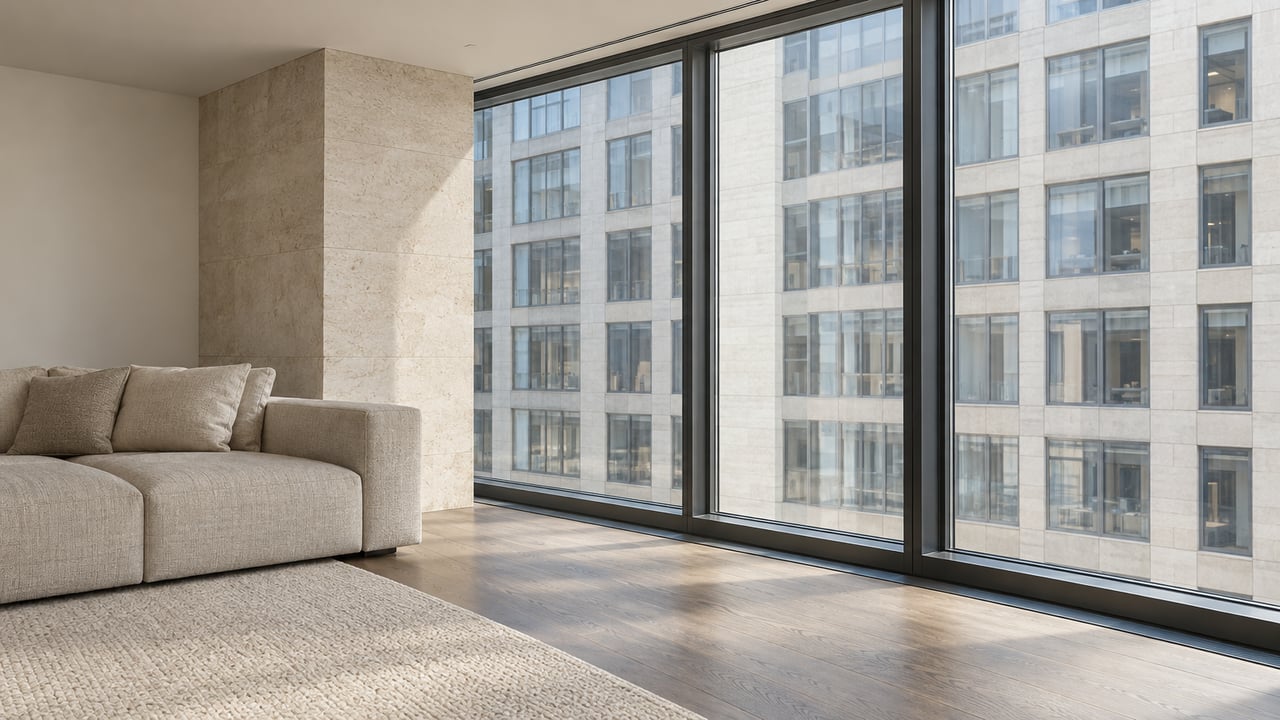
A buyer closes on a high-floor unit in a full-amenity Streeterville tower. The view is the reason they wrote the offer: unobstructed lake, a wedge of Navy Pier fireworks every summer, morning light that doesn't need curtains. Eight months later, a letter arrives from the board. Elevator modernization is funded by a special assessment.
The sale was accurately represented: the listing disclosed the monthly assessment accurately. That figure is one part of understanding a building's long-term costs. In a neighborhood with many high-rise towers, a building's reserve fund health can help buyers assess potential future costs alongside the monthly assessment.
How Streeterville's High-Rise Building Mix Affects Capital Planning
Streeterville's inventory runs the full span of Chicago's high-rise eras in a few square blocks. The Palmolive is a converted Art Deco tower from the late 1920s. Tribune Tower's residences sit inside a landmark building from the same period. Newer full-amenity developments like One Bennett Park and Optima Signature represent construction from the past decade, and buildings like 680 N Lake Shore Drive fall somewhere in between.
That range matters because the components that eventually force a special assessment, elevators, roofs, facades, central mechanical systems, all run on replacement schedules measured in decades, not years. A full elevator modernization typically comes due every 25 to 30 years and can run into the hundreds of thousands of dollars per cab. Chicago's facade inspection rules apply real pressure on top of that: when an inspector flags structural issues on a high-rise exterior, the association has to fix it, not schedule it for someday. A neighborhood with this many tall buildings built in overlapping waves means a lot of buildings are approaching the same kind of bill at close to the same time, whether the tower is a 1929 conversion or a 2015 build finishing its first cycle of major component replacement.
Some buildings clearly account for this in how they present themselves to buyers. It's common to see Mag Mile-area listings note that a building has never levied a special assessment since opening, treated as a selling point on par with square footage. That framing only exists because buyers have learned to ask the question. A buyer can confirm a claim like that by asking for the building's assessment history in writing.
The Monthly Number Everyone Compares First
A sample of active MLS listings across Chicago's condo-heavy neighborhoods this August found monthly assessments on a 1,000-square-foot unit running roughly $330 in a walk-up, $520 in a loft, $880 in a full-amenity tower, and $1,100 or more in new construction. Streeterville's inventory sits almost entirely in the last two categories, which means the comparison a buyer should be running isn't against a Lincoln Park greystone conversion, it's against other full-service towers.
| Building type | Approx. monthly assessment (1,000 sq ft) |
|---|---|
| Walk-up | ~$330 |
| Loft conversion | ~$520 |
| Full-amenity tower | ~$880 |
| New construction | $1,100+ |
The gap between $880 and $1,100 looks small on a spreadsheet. It stops looking small the moment you ask what each number is actually funding. A tower charging $880 with a fully funded reserve and a tower charging $1,100 that's still catching up after years of artificially low dues can represent the same monthly outlay and completely different exposure to the next capital project. The sticker price of the assessment tells you what you're paying today. It says nothing about what you might owe next year.
Using Reserve Funding to Assess a Building
The industry has a name for the number that matters more than the monthly line item: Percent Funded. The Community Associations Institute defines it as the association's actual reserve balance divided by what the reserve should hold given the accumulated wear on the building's major components, multiplied by 100. A building at 90 percent funded has a smaller gap to its fully funded reserve balance than a building at 25 percent.
Getting that number requires a professional reserve study, the kind of engineering assessment firms like Reserve Advisors, Criterium Engineers, and MillerDodson Associates perform for associations across Chicagoland. A full study costs a fraction of what a single special assessment runs. An association that won't spend a few thousand dollars on one is telling a buyer something about how it will handle a problem that costs four or five hundred thousand.
None of this shows up on a standard listing sheet. It shows up in the condo documents a buyer's attorney should be requesting before the inspection contingency expires.
What Restricted Hours Have to Do With the Building's Bill
There's a detail buyers usually only encounter when they try to renovate their own unit that explains why Streeterville's capital projects run expensive even by Chicago standards. High-rise buildings in the neighborhood typically restrict construction work to something like 9am to 4pm, require freight elevator bookings that can add thousands of dollars in fees, and carry insurance requirements well above what a walk-up building demands. Those same constraints apply to the association's projects, not just an individual owner's kitchen gut. A facade replacement or elevator modernization done under restricted hours, with freight logistics and elevated insurance minimums built into every contractor bid, costs more in a Streeterville tower than the identical project would in a three-flat two neighborhoods over. That's the mechanism behind why full-amenity buildings need larger reserves to stay adequately funded, not just larger buildings with more square footage to spread costs across.
The Paper Trail Worth Requesting Before You Write an Offer
A buyer who wants to know what they're actually walking into before closing has a specific list to ask for, and none of it requires a specialist to interpret:
- The most recent reserve study and its Percent Funded figure
- A record of every special assessment levied in the past three to five years
- Board meeting minutes from the last year, which often flag deferred maintenance before it becomes a line item
- The estoppel certificate at closing, which confirms current dues, any pending assessment, and the payoff status the buyer will inherit
Under the Illinois Condominium Property Act, associations can record a lien and pursue foreclosure over unpaid assessments, which is part of why the estoppel certificate exists: it protects both sides by putting the real financial picture in writing before money changes hands. Sellers who order the estoppel early and gather the current financials and minutes ahead of time give buyers what they need to move quickly.
A Second Bill on Its Own Schedule
Reserve funding isn't the only cost that resets on a timeline independent of the sale price. Cook County completed its most recent reassessment in 2024, and the next full city-wide revaluation lands in 2027. A buyer closing on a Streeterville unit this year or next shouldn't assume the seller's current tax bill carries forward unchanged. Individual units can also be reassessed off-cycle.
FAQ
Does a low monthly assessment mean a building is well managed? Not on its own. A low assessment can mean efficient operations, or it can mean a board that's kept dues artificially low and is behind on reserve contributions. The Percent Funded figure is the number that actually distinguishes the two.
If a special assessment is pending at closing, who pays it? That's a negotiated point between buyer and seller, and it's exactly what the estoppel certificate and purchase contract need to spell out before closing, not after.
Where does a buyer actually get a building's special assessment history? Through the condo documents provided during attorney review, board meeting minutes, and direct questions to the property management company. This is standard due diligence, not a special request.
A view sells the first showing. A reserve fund's health helps buyers understand what that view may cost to keep. Buyers and sellers navigating a Streeterville high-rise deserve a clear read on both before anyone signs anything, and that's the kind of diligence Eugene Fu Group builds into every transaction from the first walkthrough. If you're weighing a Streeterville purchase or preparing to list, schedule a private consultation and we'll walk the building's numbers with you before you ever make an offer.
This article is general information, not legal, tax or financial advice. Consult a qualified professional about your situation.