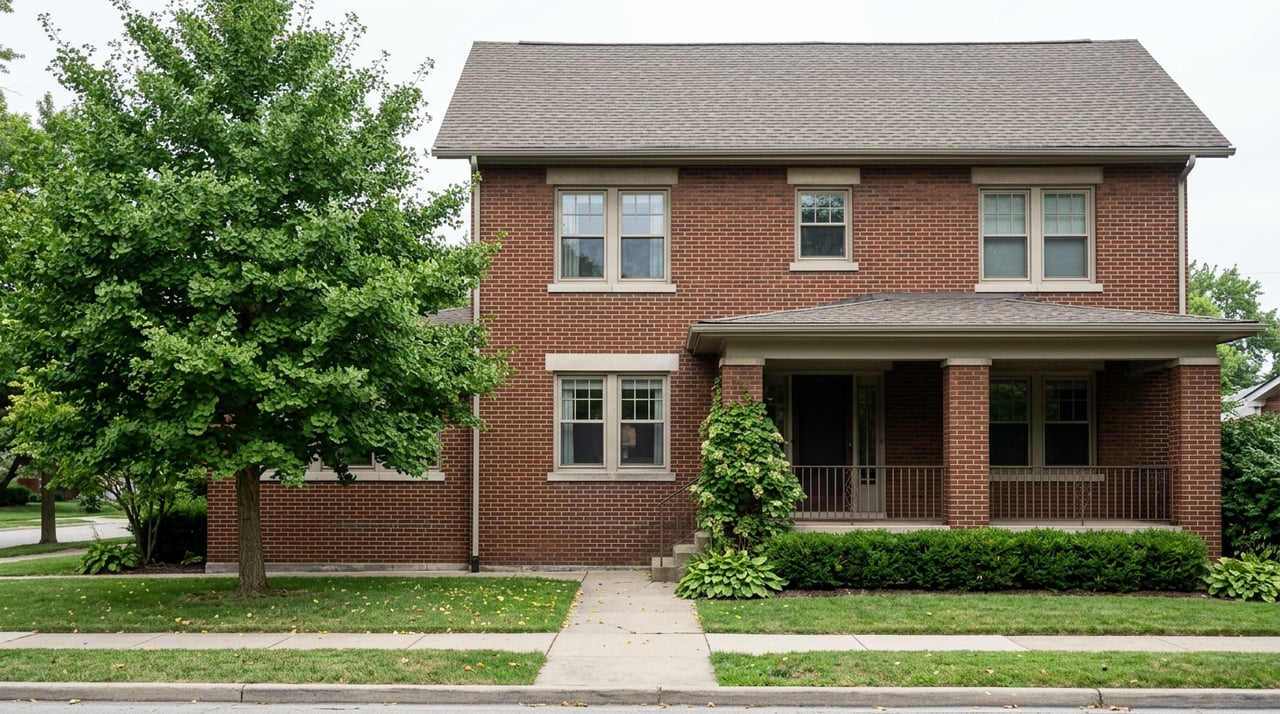
Walk north on Broadway from Thorndale to Devon on any evening this month and you'll pass the storefront that's supposed to be the neighborhood's steadiest fixture: two floors, 21,000 square feet, a faded Art Deco facade that once housed the Mann Furniture Store showroom. Broadway Antique Market has been there since 1998. It just went up for sale for $2.5 million.
The instinct is to read that as a decline story. Beloved shop, decades of memories, another Chicago original priced out. But walk another two blocks in either direction and count the storefronts that were dark eighteen months ago and are lit now. You'll run out of blocks before you run out of new signage. Broadway Antique Market is for sale amid a changing corridor, though Cerny has cited rising property taxes as an unsustainable cost.
The store that put Edgewater in an Italian guidebook
Duane Scott Cerny and Jeff Nelson didn't start in Edgewater. They opened the Wrigleyville Antique Mall on Clark Street in 1988, outgrew it, and moved the operation north to Broadway a decade later. What they built became, by their own count and the Edgewater Chamber's, the largest multi-dealer antique shop in the city, home to dozens of independent vendors selling everything from Mid-Century Modern furniture to Art Deco lighting. Cerny told the Chicago Sun-Times the shop has been listed in an Italian guidebook as one of the top ten things to do in Chicago, alongside the Art Institute and the Magnificent Mile.
None of that is why the store is for sale. Cerny told the Sun-Times his annual property tax bill recently jumped from $70,000 to $103,000, a jump he called unsustainable for a single retail operation. That's not a business in trouble. Business, he said, had never been better.
As Hoodline reported: "We were as busy as ever."
That's the sentence that reframes the whole story. This isn't a retailer priced out by empty aisles. It's a retailer priced out by a tax bill that rose faster than antique furniture margins can absorb, on a stretch of Broadway that the city just made more valuable to redevelop than to keep as-is. The building carries an Orange rating from the Chicago Historic Resources Survey, which triggers a 90-day delay on any demolition permit, but that's a speed bump, not a shield. Cerny has said the shop will stay open through the sale process, likely into 2027, so this isn't a countdown to an empty storefront next month. It's a longer goodbye, and there's still time to spend an afternoon in the aisles before whatever comes next arrives.
Restaurants and food businesses around Edgewater
The area also has a mix of new restaurant openings and established food businesses.
- Fried Egg Cafe, 1039 W. Bryn Mawr Ave., opened this spring in the space Francesca's occupied for 21 years before closing in 2022. Neighbors had watched "coming soon" signs sit in that window for over a year.
- Desi Boys Pizza, 6137 N. Broadway, opened in early 2026 from the owner of Sahil Exclusive and Annapurna Simply Vegetarian, serving what the owner calls fusion pizzas alongside classic pies.
- Zenwich Edgewater, 1124 W. Thorndale Ave., is the second location for a sandwich shop that built its name in Elmhurst, opened by Chai Ploentham after nearly 20 years running restaurants across the city.
- Teranga African Restaurant, 1131 W. Bryn Mawr Ave., serves Senegalese dishes including fataya hand pies and slow-cooked lamb stew.
- George's Deep Dish, 6221 N. Clark St., is reworking the crust on Chicago's signature pie.
Add to that De Colores Mexican Grill, the second location Patricia Guerrero is opening at 5403 N. Clark St. Guerrero already runs Edgewater Tacos, a business that traces back to her father Isidro's Durango Mexican Restaurant on Thorndale in the 1980s. The new spot has a rear patio and full seating, a real departure from the pickup counter that built her name. And DMApothecary, the herbal shop affected by nine separate floods at its old Sheridan Road location, reopened on Broadway in February with a stock of more than 500 jars of herbs and a grand opening that drew neighbors who'd kept the business alive through a GoFundMe during the worst of it.
None of these businesses made national news. That's the point. They're the kind of places that only register if you're the person who actually walks this stretch of Broadway on a Tuesday.
The tax bill and the zoning map are telling the same story
Cerny's property tax spike isn't an isolated grievance. The Cook County Assessor's Office found that non-residential commercial property assessments across Chicago rose 27% during the 2024 triennial reassessment, adding roughly $9.5 billion to citywide assessed value. Broadway Antique Market's bill is one visible result of that citywide shift, not a fluke aimed at one building.
Layer onto that the Broadway Land Use Framework, which the Chicago City Council approved in October 2025. It upzoned a 2.6-mile stretch of Broadway through Edgewater and Uptown, including the antique market's own block, to designations that allow mid-rise buildings up to 80 feet, or seven stories, without a special variance. That's exactly the kind of change that makes a two-story building on a 91-foot-wide lot worth more as a redevelopment site than as an operating antique mall, even a thriving one. SVN Chicago Commercial is marketing the property as both, business and land, because the framework makes the land half of that pitch real.
Not everyone welcomed the framework. A group calling itself Edgewater Residents for Responsible Development, joined by thirteen residents and business owners, filed suit in Cook County Circuit Court in January, arguing the city rushed the zoning process without proper notice or a real planning study. The case has continued through the year. Whatever its outcome, the upzoning itself already happened, and it's already shaping which buildings on Broadway feel worth holding onto and which start to look like more valuable land than business.
The festival picked its block on purpose
The Edgewater Chamber of Commerce didn't choose a random stretch of Broadway for its flagship event. The second annual Edgewater Music Fest took over Broadway between Thorndale and Ardmore Avenues August 28 through 30, the same five blocks absorbing most of this year's restaurant openings. More than 30 performances across two stages featured headliners Ted Leo & The Pharmacists, NNAMDï, and Maps & Atlases, alongside Mucca Pazza, Spitalfield, Lowdown Brass Band, Neptune's Core, and North By North. Entry ran on a suggested $10 donation that supports both the Chamber and Care For Real, the Far North Side food pantry.
Chamber Executive Director Garrett Karp said the festival's growth reflects momentum tied to the neighborhood's own restaurants and creative businesses, not just the touring acts on the bill. It's worth remembering that this was only the second time the Chamber has run a large street festival since 2019, when the last EdgeFest wrapped. A block that reads as connective tissue between Andersonville and Loyola for most of the year doesn't usually get chosen as a destination twice in a row. This one just did.
The block still has one foot in the past
Not everything moving through Edgewater this fall is about new construction or new leases. This past Sunday, the 35th Annual Edgewater Home Tour opened doors across the Edgewater Glen Historic District, the pocket of over 400 American Foursquare and Prairie-style homes built mostly between 1900 and 1928. Twenty-five dollars got you inside a set of interiors that have nothing to do with the upzoning fight happening a few blocks east on Broadway. It's a reminder that Edgewater's identity was never just its commercial strip. The historic district's continued pull, decade thirty-five and counting, is its own kind of stability running alongside Broadway's churn.
What changes for someone who already lives here
If you already know this corridor, the practical shift is small but real. The antique market is still open, still worth the visit, and will be for a while yet, so there's no rush. The new restaurant cluster means a Friday night out no longer requires crossing into Andersonville. The Monday farmers market at Broadway and Thorndale runs through the season with the same 30-plus vendors it's had all summer. And the next flashpoint to watch isn't a grand opening. It's whoever ends up buying 6130 N. Broadway, and what they decide a 91-foot-wide, seven-story-eligible lot is worth building.
If you've been watching your own Edgewater property's value shift alongside these changes, or you're weighing what a stretch like this means for buying or selling near the lakefront, the Eugene Fu Group knows this corridor block by block. Schedule a private consultation and let's talk about what Broadway's next chapter means for your address.
This article is general information, not legal, tax or financial advice. Consult a qualified professional about your situation.