What does lakefront living in Chicago actually feel like when it is part of your daily routine, not just a weekend plan? In Edgewater, the answer is less about postcard views alone and more about easy access to free beaches, a long stretch of trail, and transit that can make everyday life simpler. If you are considering a move to this part of the North Side, it helps to understand how the shoreline, housing stock, and neighborhood layout work together. Let’s dive in.
Why Edgewater Lakefront Living Stands Out
Edgewater offers a version of lakefront living that feels practical as well as scenic. You are not choosing between beauty and convenience here. The neighborhood’s shoreline is supported by public beaches, the Lakefront Trail, and multiple Red Line stops that connect you to the rest of the city.
That combination matters because it shapes how you use the neighborhood day to day. Instead of treating the lake as a special-occasion amenity, you can build it into your morning walk, bike ride, commute, or evening reset. For many buyers, that is the real value of living on the lakefront in Edgewater.
Edgewater Beaches You Can Actually Use
The core of Edgewater’s shoreline lifestyle is its access to two Chicago Park District beach destinations: Lane Beach Park at 5915 N Sheridan Road and Kathy Osterman Beach at 5800 N Lake Shore Drive. The beaches are free to use, and the Park District says swim season runs from the Friday before Memorial Day through Labor Day, with lifeguards on duty from 11 a.m. to 7 p.m.
Kathy Osterman Beach adds another important layer of accessibility. The Park District notes that it includes an accessible beach walk and a free beach wheelchair program. That makes the lakefront more usable for a wider range of residents and visitors.
If you like longer beach days, Foster Beach nearby in Lincoln Park is another useful option. It offers a beach house, food concessions, bike rentals, and restrooms, which can make it a good choice when you want a larger destination-style beach experience without leaving the lakefront corridor.
Kathy Osterman Beach at a glance
Kathy Osterman Beach is one of the strongest draws for buyers exploring Edgewater. It gives you direct access to sand, water, and open skyline views while staying close to residential streets and transit connections.
For many residents, this beach becomes part of a regular rhythm. You might start the day with a walk, spend an afternoon by the water, or use the area as a natural extension of your neighborhood routine.
Lane Beach Park for a quieter shoreline feel
Lane Beach Park is another key piece of the Edgewater shoreline. It gives residents another nearby access point to the water and helps spread out beach activity across the neighborhood.
That extra option matters if you value flexibility. On a warm summer day, having more than one beach nearby can make the lakefront feel easier to enjoy on your own schedule.
The Lakefront Trail as a Daily Amenity
The beach gets a lot of attention, but the Lakefront Trail is just as important to life in Edgewater. According to the Chicago Park District, the trail runs from Ardmore Avenue on the north to 71st Street on the south. The 2018 trail-separation project created an 18-mile bike trail and an 18.5-mile pedestrian trail.
That separation helps make the shoreline more functional for different types of users. If you run, walk, or bike, the trail is not just recreational. It can also support a smoother everyday routine.
For buyers comparing neighborhoods, this is a major lifestyle point. In Edgewater, the lakefront is not only something you look at from a window or balcony. It is also an active public asset that supports movement, exercise, and time outdoors.
A Car-Light Lakefront Lifestyle
One of Edgewater’s biggest advantages is how well it works for buyers who do not want to depend on a car every day. CTA station information shows four Red Line stops in the neighborhood: Granville, Thorndale, Bryn Mawr, and Berwyn.
These stations help connect residents to both the lakefront and the rest of the city. Bryn Mawr connects to buses 36 and 84, Berwyn connects to 36, 92, and 146, and Granville connects to 36. Osterman Beach is also served by buses 84, 147, and 151, along with the Bryn Mawr Red Line station.
CTA also completed rebuilds of the Lawrence, Argyle, Berwyn, and Bryn Mawr stations, reopening them on July 20, 2025. The agency says these stations now include full ADA accessibility, elevators, escalators, wider platforms, enhanced lighting and security, and real-time travel information displays.
The broader data supports what many residents already experience. CMAP reports that 38.5 percent of Edgewater households have no vehicle, 29.3 percent commute by transit, and 25.3 percent work from home. For a lakefront neighborhood, that is a strong sign that Edgewater supports a flexible, car-light lifestyle.
What Homes Near the Lake Look Like
If you picture Edgewater as primarily a single-family lakefront neighborhood, the data tells a different story. CMAP estimates that 62.3 percent of housing is renter-occupied and 37.7 percent is owner-occupied, with 54.7 percent of units in buildings with 20 or more units. It also reports that 43.4 percent of housing was built before 1940.
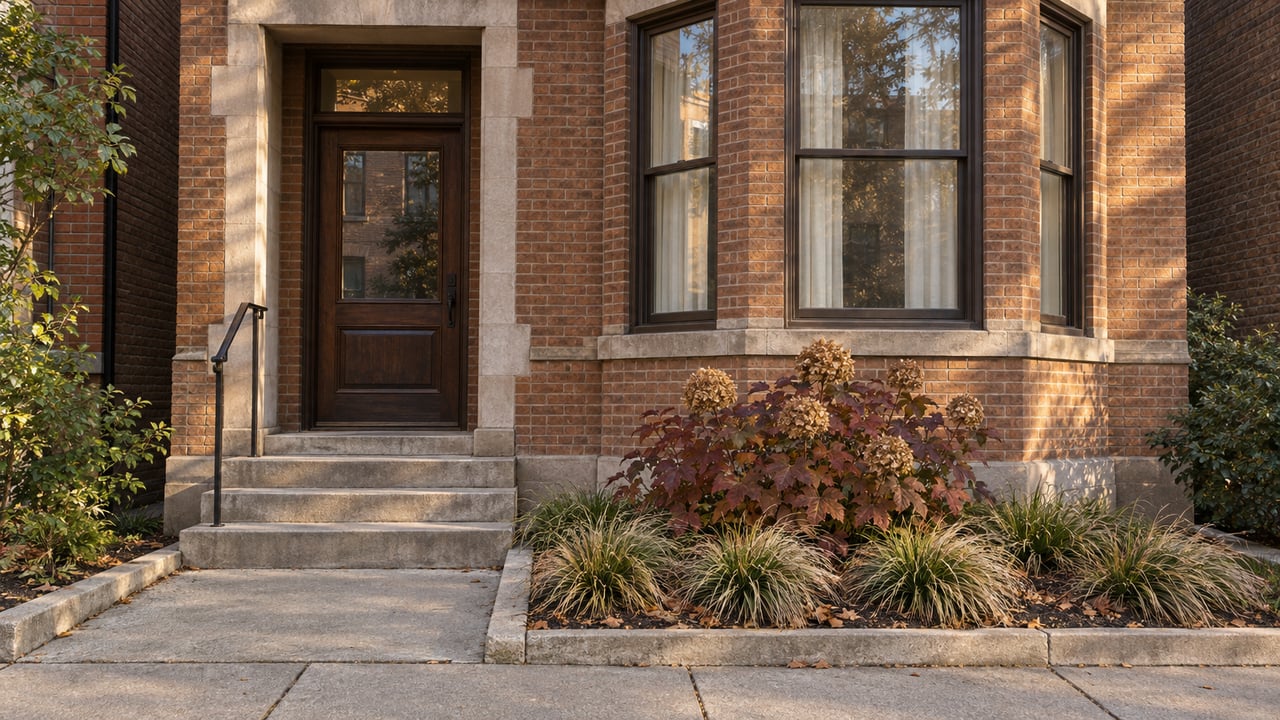
In practical terms, Edgewater is a dense, architectural, and largely condo-forward neighborhood. Along Sheridan Road, the shoreline identity is closely tied to high-rises and historic apartment buildings. Inland, you will also find walk-ups, courtyard buildings, and conversion-style housing that broaden the range of options.
The Edgewater Historical Society adds useful context here. It notes that pre-1920 apartment stock commonly included two-flats, three-flats, and six-flats, and that the Edgewater Beach Apartments at Bryn Mawr and Sheridan is the sole survivor of the old Edgewater Beach Hotel complex and has operated as a co-op since the late 1940s.
Who Edgewater tends to suit
Based on the housing and household data, Edgewater often appeals to buyers who want lake access without taking on a single-family footprint. That can include first-time condo buyers, downsizers, and people drawn to elevator buildings, vintage conversions, or co-op living.
CMAP also reports that 53.4 percent of households are one-person households and 31.7 percent are two-person households, with a median age of 38.4. Those numbers help explain why the neighborhood often feels well matched to singles, couples, and buyers looking for a simpler, more connected urban lifestyle.
Daily Life Beyond the Water
Edgewater’s food and retail story is not centered on a restaurant strip directly on the lake. Instead, the neighborhood’s commercial life is corridor-based. The Edgewater Chamber highlights Broadway and Devon through Special Service Area 26 improvements, and also notes patio rebate activity along Broadway and parts of Devon, Bryn Mawr, and Granville.
For you as a buyer, that means the neighborhood functions as a series of walkable commercial corridors near the shoreline. You can enjoy the lakefront while still having everyday dining and café options woven into the residential fabric of the neighborhood.
That pattern often appeals to people who want balance. You get the openness of the lake, but your day-to-day errands and local spots still feel embedded in a real neighborhood setting.
How Edgewater Compares Nearby
If you are choosing between North Side lakefront neighborhoods, Edgewater occupies a useful middle ground. Compared with Lincoln Park, Edgewater is more apartment-dominant and older. CMAP shows 54.7 percent of Edgewater housing is in 20-or-more-unit buildings, compared with 43.4 percent in Lincoln Park, and 43.4 percent of Edgewater housing was built before 1940, compared with 33.9 percent in Lincoln Park.
Compared with Uptown, Edgewater is somewhat less renter-heavy. CMAP reports Edgewater is 62.3 percent renter-occupied, while Uptown is 70.9 percent renter-occupied. That makes Edgewater a potentially appealing option if you want a lakefront setting with a somewhat more balanced ownership-rental mix.
Compared with Rogers Park, Edgewater has a higher median household income and more one-person households. CMAP reports a median household income of $70,188 in Edgewater versus $59,554 in Rogers Park, and one-person households account for 53.4 percent of Edgewater households versus 47.6 percent in Rogers Park.
These comparisons do not make one neighborhood better than another. They simply help clarify Edgewater’s identity. It often stands out as a residential, amenity-rich lakefront choice for buyers who want density, transit, and housing options that lean condo and co-op rather than single-family.
What to Consider Before You Buy
If you are thinking about living on the lakefront in Edgewater, it helps to focus on how you want to use the neighborhood. A beautiful view matters, but so do your building type, transit habits, and everyday routines.
Here are a few smart questions to ask yourself:
- Do you want direct beach access or just proximity to the lakefront trail?
- Are you most comfortable in a high-rise, a vintage courtyard building, or a co-op setting?
- How important is Red Line access to your workweek?
- Do you want a home that supports a car-light lifestyle?
- Are nearby dining corridors and walkable errands part of your decision?
The answers can help narrow your search quickly. In Edgewater, location within the neighborhood can shape your experience in meaningful ways, even when homes are all broadly tied to the same lakefront story.
The Edgewater Lakefront Bottom Line
Edgewater offers one of the most usable versions of lakefront living on the North Side. The appeal is grounded in free beaches, a separated Lakefront Trail, strong CTA access, and a housing mix that supports condo, co-op, and multifamily living near the water.
For many buyers, that creates a compelling package. You can enjoy shoreline access, flexible transit, and a distinctly residential neighborhood feel without relying on a car or a single-family housing model. If that mix matches the way you want to live in Chicago, Edgewater is worth a serious look.
If you are exploring Edgewater or comparing it with other Chicago lakefront neighborhoods, Fu Group can help you navigate the options with a polished, strategic approach tailored to your goals.
FAQs
What is lakefront living in Edgewater like day to day?
- Edgewater lakefront living is shaped by free public beaches, access to the Lakefront Trail, and multiple Red Line stops, which makes the shoreline feel like part of daily life rather than a special destination.
Which beaches serve the Edgewater lakefront area?
- Edgewater’s main beach assets are Lane Beach Park and Kathy Osterman Beach, both managed by the Chicago Park District.
Is Kathy Osterman Beach accessible for Edgewater residents and visitors?
- Yes. The Chicago Park District says Kathy Osterman Beach includes an accessible beach walk and a free beach wheelchair program.
How does the Lakefront Trail support life in Edgewater?
- The Lakefront Trail supports walking, running, and cycling, and the Park District says the separated trail system includes an 18-mile bike trail and an 18.5-mile pedestrian trail.
Is Edgewater a good neighborhood for car-light living?
- The data suggests yes. CMAP reports that 38.5 percent of Edgewater households have no vehicle, while CTA rail and bus connections provide strong transit access.
What types of homes are common near the Edgewater lakefront?
- Edgewater is largely condo-forward, with high-rises along Sheridan Road, historic apartment buildings, co-op options, and inland walk-ups and courtyard buildings.
Who typically considers buying near the Edgewater lakefront?
- Based on the housing and household profile, the neighborhood often appeals to first-time condo buyers, downsizers, singles, couples, and buyers who want lake access in a multifamily setting.
How does Edgewater compare with other North Side lakefront neighborhoods?
- Edgewater generally offers a dense, transit-friendly, residential lakefront setting with more large multifamily housing than Lincoln Park and a somewhat less renter-heavy profile than Uptown.