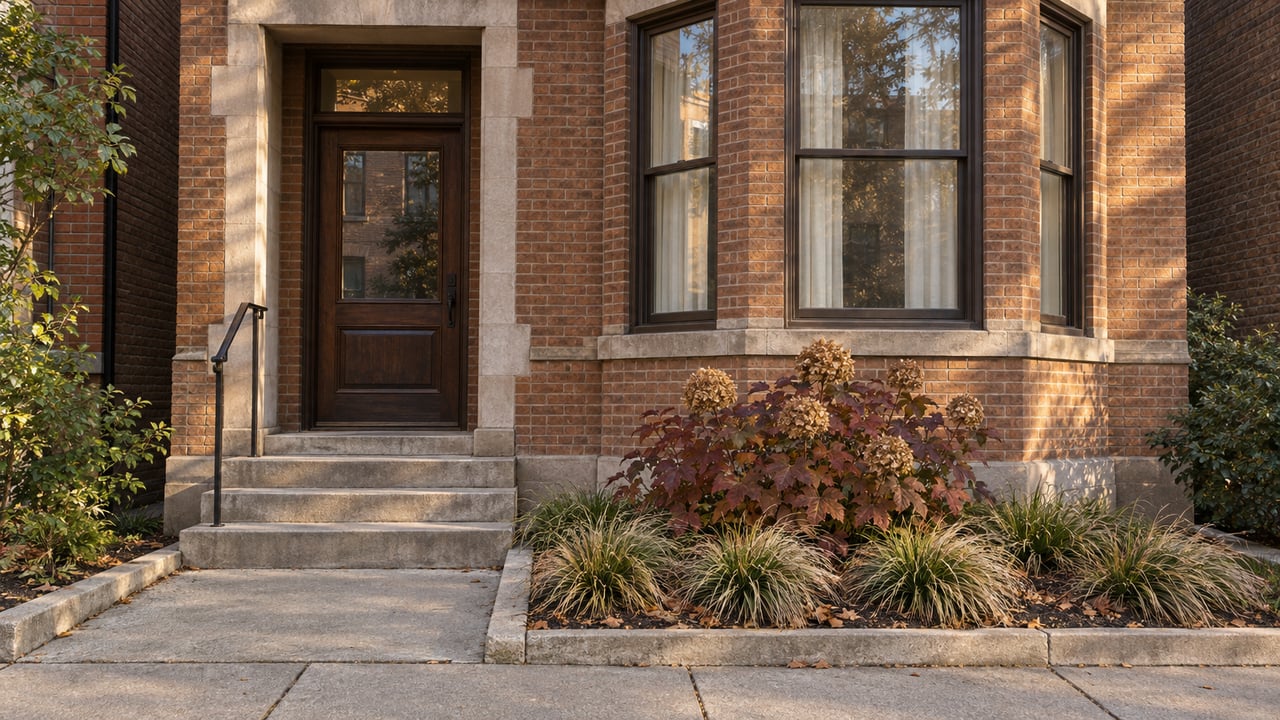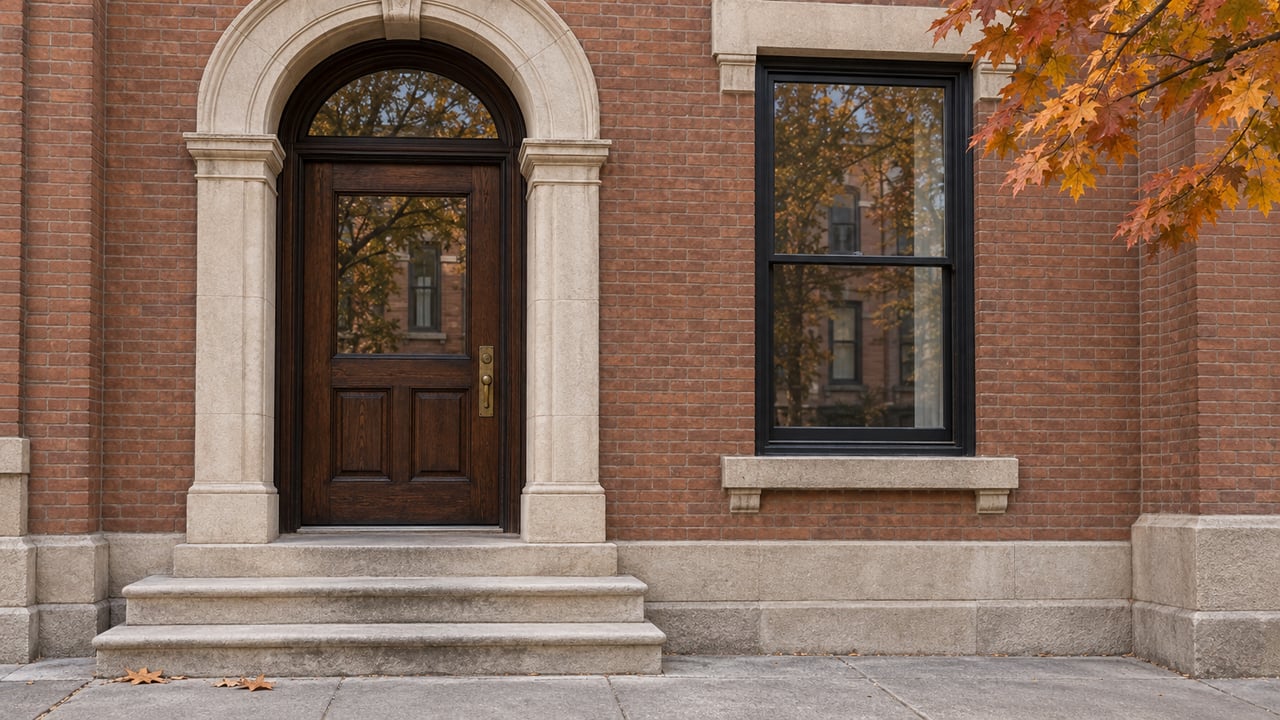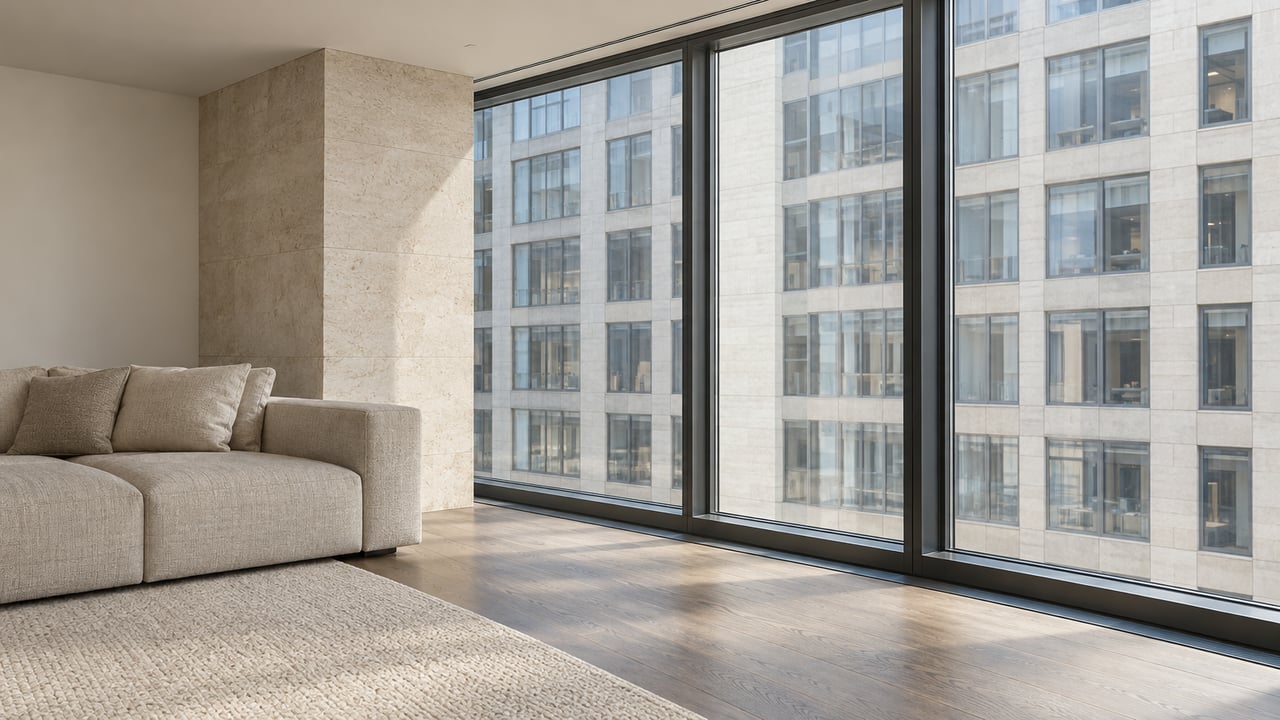
Two blocks apart, two different neighborhoods are happening at once. On Randolph Street, the operators who defined Restaurant Row a decade ago are quietly moving back into rooms that opened, closed, and are opening again. On Fulton Market, cranes are still going up on land that was a meatpacking dock inside living memory. Both stories get called "West Loop growth." They are not the same story, and the difference matters if you live here.
The reader test for this post is simple. If you already walk to Mariano's on Halsted, cut through Mary Bartelme Park on your way home, and know which corner of Morgan and Randolph the wind hits hardest in February, this is a map of what is different on your route between Memorial Day and Labor Day.
Randolph is being re-tenanted, not rebuilt
The most striking pattern on Restaurant Row this year is who is signing the leases. It is not a new generation. It is the group that built the row in the first place, taking over rooms that changed hands.
The old Grace and Yūgen space at 652 W. Randolph reopened in late February as SuSu, a MediterrAsian steakhouse from chef Alexander Willis. The former Proxi room, one of the more architecturally distinctive dining rooms on the strip, is being taken over by John Manion of El Che Steakhouse & Bar. The Gibsons Restaurant Group is working on a tavern concept somewhere in the West Loop, quietly, without a firm address yet. Bill Kim, whose BellyQ closed on Randolph years ago, is bringing Urbanbelly back to 950 W. Randolph from its current Wicker Park home. Labriola, a Magnificent Mile institution for more than a decade, opened Labriola Italian Specialties at 852 W. Randolph.
None of these are debuts. They are all returns, expansions, or reclamations. The lone true first-time bet on the corridor this season is All Well at 111 N. Carpenter, a five-course prix fixe with an à la carte bar from Noah Sandoval and Larry Feldmeier, the Oriole team, in partnership with 16 on Center. Even that comes from an operator with two Michelin stars already earned two blocks away.
The interpretation is worth stating plainly. Restaurant Row has crossed the threshold from an emerging scene to a mature one. The rents will now be paid by people who have already proven they can pay them, and the culinary risk is being taken inside rooms that have been proven, not built. If you have been eating on Randolph since the mid-2010s, the names on the awnings this summer read like a class reunion.
Fulton Market is growing by addition
Walk three blocks north and the mode changes. Fulton Market is still adding square footage, not swapping tenants.
The Fulton Bond development at 1325 W. Fulton opened its sales center in late February, with two towers by KPF and ParkFowler Plus totaling 149 condos, and penthouses expected to price above the $7.6 million record that Sulo Development's own Embry set at 19 N. May Street. Pearl Fulton Market, a 494-unit rental from Vista Property Group, is roughly eight months from delivery with more than a thousand names on its interest list. CRG's Stead 220 at 220 N. Ada finished construction as a 29-story rental. A joint venture of Focus Development, Melrose Ascension Capital, and DAC is building a 19-story, 287-unit tower at 1221 W. Washington. Full building permits went out in late July for a five-story, 16-condo building at 1282 W. Washington. A 29-story, 347-unit proposal at 215 N. Racine is working its way through the zoning fight over whether Fulton should allow downtown-scale density at all.
The block bounded by Fulton, Sangamon, and Peoria is a case study on its own. Time Out Market closed there earlier this year. Directly across the street, The Fulton finished construction with new Equinox and Gibsons outposts inside. The Time Out building itself is being subdivided into a multi-tenant retail space. Behind it, a hotel proposal sits on the market at 311 N. Sangamon. The 900 W. Fulton three-building rehab from Midwest Property Group has city approval to preserve two facades and drop a five-story red brick infill in the middle. Four separate projects on one block, all in motion, none of them competing for the same tenant.
| Corridor | Growth mode this year | Named signal |
|---|---|---|
| Randolph Street | Veteran operators re-tenanting proven rooms | SuSu, All Well, El Che at Proxi, Gibsons tavern, Urbanbelly return |
| Fulton Market | New residential and mixed-use construction | Fulton Bond, Pearl, Stead 220, 1221 W. Washington, 215 N. Racine |
| Washington Boulevard | Small-format condo infill and pipeline plays | 1282 W. Washington, planned Aldi at tower base |
What the pipeline numbers actually say
The clearest read on which corridor investors believe in comes from the office and pipeline data. West Loop and Fulton Market together account for roughly 8,500 proposed apartment units, more than the rest of downtown Chicago's submarkets combined, and 1,280 of the 3,000 units currently under construction downtown, according to a Cushman & Wakefield count cited at the July 21 Bisnow Future of Fulton Market event. Fulton Market office vacancy sat just under 15% in JLL's second-quarter report while downtown as a whole ran at 25%. Average asking rents in Fulton reached about $72 per square foot; the next-closest submarket, River North, ran closer to $53.
Those are commodity numbers on the surface. Read them against what is actually being built and they explain the two-mode neighborhood. Rents that clear $72 per square foot are the reason a KPF-designed condo tower can pencil at Fulton and Elizabeth. Randolph, one block south, does not need that math because the buildings are already there and the rents have already been paid down. The corridor gets to be selective about operators; Fulton has to keep delivering product.
The takeaway for a resident is that Fulton is where the neighborhood is still being decided, and Randolph is where it is being defended.
Lake Street is turning into the daily-use corridor
The corridor most likely to change your weekday routine this summer is not either of those. It is Lake Street, the stretch under the Green and Pink Line viaduct that most residents currently use as a shortcut.
Lake Street Athletic, the first Midwest location of the New York-based Club Athletic, opens in August at 1035 W. Lake. The model is squad-based training, fixed 20-person groups meeting twice a week with the same coach and teammates, borrowed from team-sport accountability. Kumiko, at 630 W. Lake, remains one of the country's more serious cocktail programs. An Aldi is coming to the West Loop at the base of a planned apartment tower, which will change the everyday grocery calculus for anyone currently splitting trips between Mariano's, Whole Foods on Halsted, and the Chicago French Market at Ogilvie.
The reason Lake Street matters for daily life is that it fills in the gap between the evening-oriented Randolph corridor and the residential-heavy blocks around Washington. A gym, a grocery, and a cocktail bar within four blocks of each other is the definition of a neighborhood becoming self-sufficient in daylight hours, not just at 7:30 p.m. on a Friday.
A short calendar for the rest of the season
- Now open: SuSu at 652 W. Randolph, All Well at 111 N. Carpenter, Labriola Italian Specialties at 852 W. Randolph, Ancient Grounds coffee in the West Loop, Good Ambler's second location at 2 N. Riverside Plaza (June 22)
- August: Lake Street Athletic opens at 1035 W. Lake
- Watching: John Manion's takeover of the former Proxi space, Urbanbelly's move to 950 W. Randolph, the still-unaddressed Gibsons tavern, Fulton Bond sales at 1325 W. Fulton, the Aldi announcement's timing
- Block to walk: Fulton between Sangamon and Peoria, where four projects are underway on a single block including the 900 W. Fulton rehab and the 311 N. Sangamon hotel site
What this reshuffles if you already live here
The practical read is that the West Loop is finishing two different arguments at once. Randolph has settled the question of whether it is a destination row. It is, and the operators who proved it are now consolidating. Fulton is still answering the question of what happens when a former industrial district gets skyscraper-scale zoning requests, a debate the 215 N. Racine proposal has pushed onto the Chicago Plan Commission agenda. Lake Street is answering a quieter question about whether the middle of the neighborhood can carry weekday traffic on its own.
For anyone who owns here, the useful frame is that the summer's changes are not evenly distributed. The value case for a Carpenter Street loft is a Randolph story: a mature restaurant corridor two blocks away with veteran operators paying premium rent to be there. The value case for a Fulton Bond penthouse is a construction story: a new-build stack of amenities designed to compete with the towers that will be delivered around it in 2027 and 2028. Those two arguments run on different clocks, and they respond to different signals.
If you are thinking about what this shift means for your own address, or what a serious buyer walking your block this fall will read into all of it, the Eugene Fu Group tracks these corridors listing by listing. Schedule a private consultation to talk through where your building sits in the summer's rearrangement.